Hello from Twisted Roots,
How are you? It's lovely to have you here. It's been a little while since I last shared some of my thoughts and discoveries, and I've been looking forward to bringing them together in one place.
Autumn is probably my favourite season, and I honestly cannot believe it is almost over!
With meteorological winter starting on 1 December, the colder months are just
around the corner.
How are you finding the darker evenings?
I personally love them, especially on my days off. They give me an excuse to make a lovely herbal tea, catch up on articles and films, and spend a little more time on things I never seem to get around to during the busier seasons.
Winter is also when I tend to write my blog entries, reflect on everything that has
happened throughout the year and enjoy a few creative projects and cooking. There is
something lovely about having permission to slow down a little.
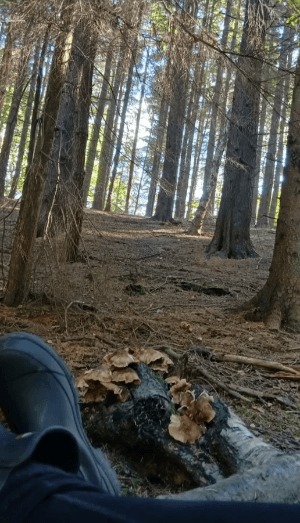
I have been making the most of the warmer months, spending lots of time outdoors foraging for herbs, wild fruits, and later in the summer and autumn, for mushrooms.
Two of my autumn favourites have been hawthorn berries and wild rose hips. I have been collecting and drying them to make my own herbal tea for the colder
months, jams, and in previous year for an amazing home made wine!
Both are fascinating little gifts from nature.
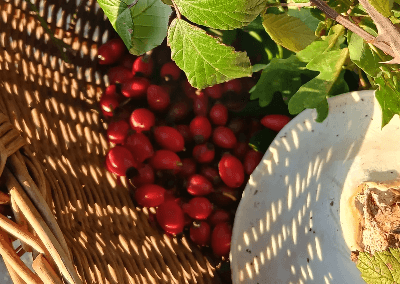
Rose hips, the bright red fruits of wild roses, are particularly well known for their vitamin
C content. They also contain polyphenols, flavonoids and carotenoids, which
have antioxidant properties. They have a long history of traditional use,
particularly as a winter food and in herbal teas.
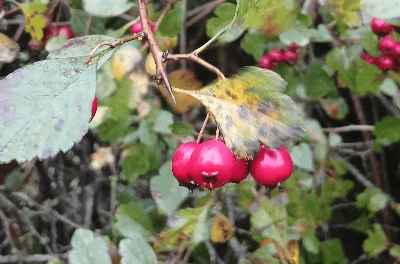
Hawthorn berriesare equally interesting. They contain various plant compounds, including flavonoids and other polyphenols, which are being studied for their antioxidant
properties. Hawthorn has a long history in traditional herbal medicine,
particularly in relation to cardiovascular health.
I love learning more about the plants I come across and understanding what makes them so special.
It makes an ordinary walk
through the countryside feel like an opportunity to discover something new.
I feel that, especially for younger generations, the ability to recognise and use what nature offers us is becoming a forgotten skill.
I think it is important that we find our way back to a simpler way of living, rethinking our food, our eating habits, our work-life balance and the way we connect with the world around us.
We need to slow down a little, pay more attention to what nature is telling us and appreciate everything it has to offer.
I think we have so much to learn from it and it would be a shame to
lose that knowledge.
Summer and autumn is also when I preserve everything I have collected. I dehydrate my foraged mushrooms, pickle some in wine or apple vinegar with lovely spices, sort through my dried herbs and spend quite a bit of time filling jars!
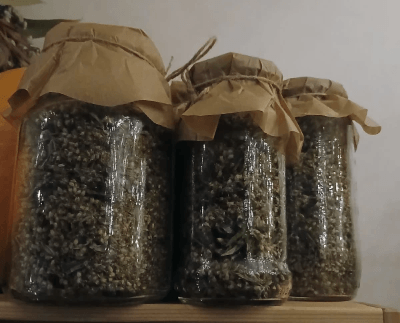
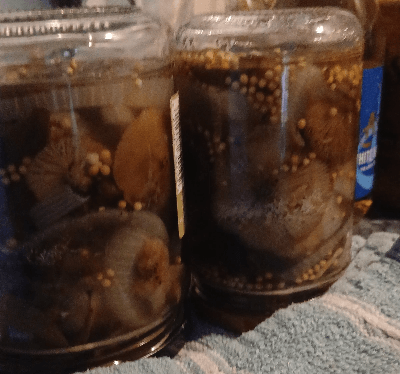
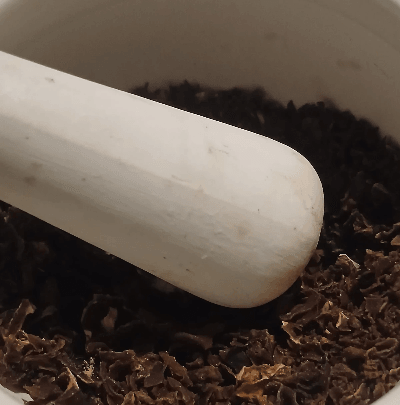
I find it incredibly satisfying knowing that some of the things I gathered on sunny summer days and autumn afternoons will be waiting for me in the kitchen months later.
As the days get shorter, it can become much easier to spend most of our time indoors. The cold, rain and lack of daylight can make us less inclined to leave the house and for many people the darker months can also be challenging for their mental wellbeing.
This is exactly why, I think is so important to keep making time for the outdoors, even when the weather isn't particularly inviting.
You don'tneed to go on a long hike, climb a mountain or spend hours exercising.
Sometimes it is simply about allowing yourself a little time outside without rushing anywhere.
There is growing scientific interest in the benefits of forest bathing and nature
connection for our mental and physical wellbeing.
A particularly interesting 2026 review and meta-analysis brought
together 25 studies involving 1,876 participants. Researchers found that forest
therapy was associated with reductions in psychological stress, anxiety
symptoms and depressive symptoms. There rearchers noted moderate to large short-term effects.
Forest bathing is not a replacement for mental health treatment but it is a promising complementary way of supporting wellbeing.
You can read the research here:
I would love to encourage you to try something simple this winter. Make a little space in your weekly routine for at least two hours of mindful outdoor time. It's just 17 minutes a day!
It doesn't have to be all in one go. It could be a short walk in your local woodland, green space on the way to or from work, sitting on a bench in the park, noticing the
changing colours of the trees, simply enjoying a cup of tea in your garden or even
turning of your TV, leaving your mobile phone aside and appreciating your household plants.
The important thing is to give yourself permission to slow down, notice your
surroundings and be present. Sometimes, we don't realise how much we need that time until we actually take it.
I have also been keeping myself busy with something new!
I recently started Herbalism and Phytotherapy vocational course with The Polish Academy of Complementary Medicine and Phytotherapy. I have lectures every other weekend, and I am finding myself more and more fascinated by the world of
natural substances and their traditional uses.
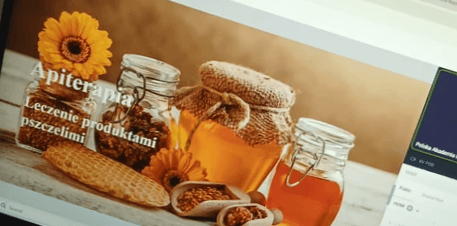
We have just completed a 15 hours input on Apitherapy, which explains the therapeutic use of bee products, and honestly, my mind was blown!
Of course, most of us know that honey has a long history of use in traditional medicine,
but have you ever tried PROPOLIS?
Propolis is sometimes called bee glue. It is a wonderfully interesting substance that
honeybees make using resinous materials collected from tree buds and other
plants, which they mix with beeswax and their own secretions. They use it to
seal small gaps in the hive and help protect their home.
But what makes it so interesting to herbalists and researchers?
Propolis is something people have known about since ancient times, but the more I learn about it, the more fascinating it becomes.
Did you know that only a small number of bees in a colony (around 10 to 30 ) are responsible for collecting the resin used to make propolis?
Propolis is often described as one of nature's most powerful bee products, it is a wonderfully complex mixture of natural compounds, including flavonoids and phenolic acids. It has been studied for its antioxidant, antibacterial, antimicrobial and anti-inflammatory properties, as well as its potential to support wound healing, reducing dental plaque and immune responses. Research is still exploring its many possible benefits to human health, and there is so much more to discover! What caught my attention is the research exploring how propolis might work alongside certain antibiotics, potentially enhancing their activity.
It's amazing to think that something so small, made by such a small group of bees, can be so complex.
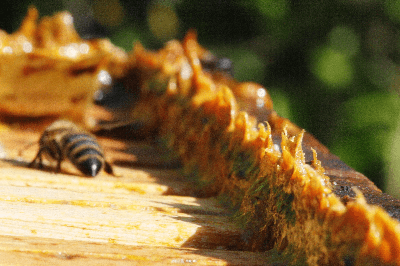
I'm particularly interested in propolis tincture, which is traditionally made using alcohol to extract some of its biologically active compounds. Last weekend during the lecture, we learned how to make our own!
Now I just need to find a local beekeeper who could supply me with some propolis when the bees become more active again in spring and summer. If you know a local beekeeper who might be able to help, I'd love to hear from you!
A little safety note: Propolis can cause allergic reactions, particularly in people sensitive to bee products so it is not suitable for everyone.
I still have a few more lectures coming up before the end of the year, including phytotherapy for cardiovascular and musculoskeletal conditions, cannabis-based medicine and gemmotherapy (the use of plant buds and young shoots in herbal medicine). And there are plenty more units waiting for me in 2027!
There is always something new to explore, discover and understand.
I suppose being a lifelong learner is simply part of who I am!
Although I must admit, I'm not quite as excited about the upcoming exams… but hey ho! :)
Festive Forest Bathing at The Black ShedGallery at Russet Farm in Robertsbridge
Saturday 12 Decmeber 11am-1pm, £25pp
I would love to invite you to join me for a special Festive Forest Bathing and Nature Connection session!
As Christmas gets closer, it can be easy to get caught up in shopping,
preparations, work and endless to-do lists. So I thought it would be lovely to
create a little space to step away from all of that.
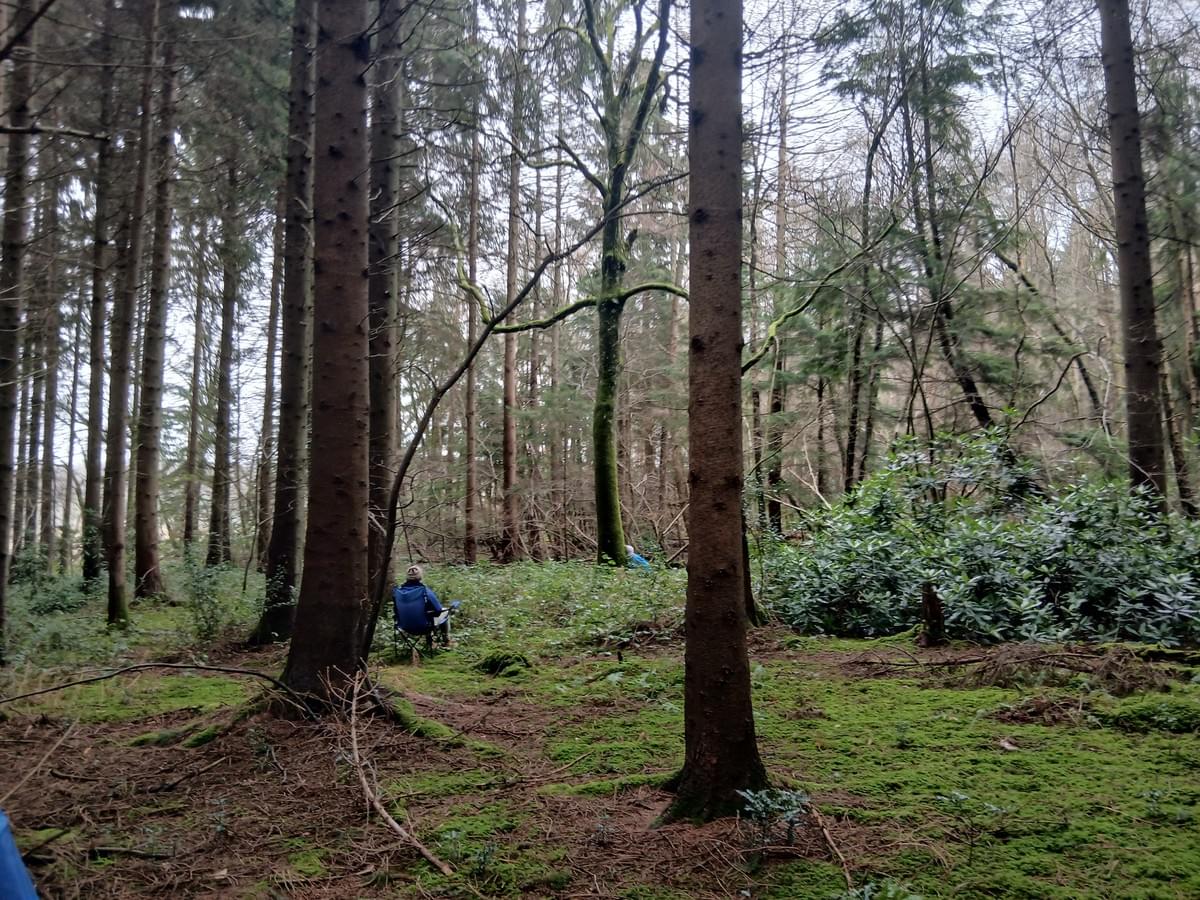
We will spend some time outdoors slowing down, reconnecting with our surroundings and enjoying the woodland in its winter colours.
There will be gentle mindful invitations, time to notice the little details we might
normally walk past and a chance to enjoy some peaceful moments away from
everyday distractions.
I am also planning a little festive creative activity using natural materials, bringing
together nature connection and the simple pleasure of making something with our
hands.
You don't need any previous experience, special equipment or artistic skills. Just come
as you are, wrap up warm and allow yourself a little time to enjoy the experience.
If you would like to join me, please get in touch with Lorna at
lorna123@theblackshedgallery.org.uk to reserve your place.
Book in early as spaces are limited!
Twisted Roots Inner Circle
I'm very excited to invite you to join the
Twisted Roots Inner Circle!
A special FREE TO JOIN members' space on my website where you can log in and explore a little more of what Twisted Roots is all about. Think of it as a place to discover, experience and try things for yourself, wherever you are and whenever you have a little time.
You'll already find a guided audio invitation to take with you on your next nature walk, helping you slow down and connect with a living tree exploring it as an organism in its own right and as another living being, equal to yourself.
You'll also find a recipe for a cake with foraged fruits I baked and shared during one of our summer woodland sessions.
I'll be adding more along the way, from guided audio and video invitations and creative activities to little discoveries, seasonal ideas, recipes and things I'm learning through my own journey with nature connection.
I'd love you to join me on this journey of learning, exploring and discovering the beautiful world of nature connection in all its forms.
I hope the coming weeks bring you some cosy evenings, lovely cups of tea and perhaps a little more time outdoors.
Take care of yourselves, keep warm and I hope to see some of you in the woodland soon!

From the woods
Celina 🌿| Twisted Roots